The Algorithm Audition: How Tech Replaced Hollywood's Old Gatekeepers (And Built New Ones)
Not long ago, breaking into entertainment had a pretty well-worn script. You moved to LA or New York, you signed with an agent if you were lucky, you went on a thousand auditions, and you waited for someone in a position of power to decide you were worth the investment. The system was slow, expensive, deeply subjective, and notoriously tilted toward people who already had connections, money, or both.
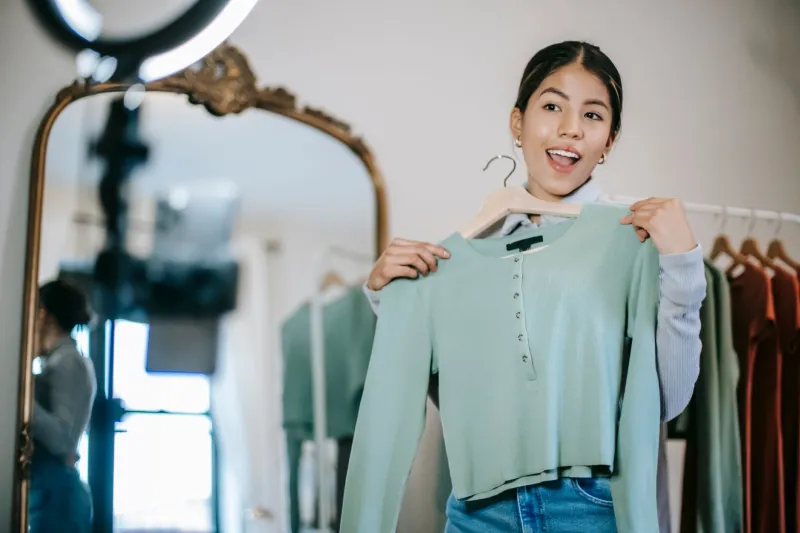
Then TikTok happened. And Instagram Reels. And YouTube Shorts. And suddenly, a teenager in rural Ohio with a ring light and a decent Wi-Fi connection could rack up ten million views before a single casting director had heard her name.
This is the story we love to tell about social media and talent discovery. It's not wrong. But it's also not the whole picture.
The Democratization Myth (And the Real Version)
Let's start with what's genuinely true: social media has launched careers that the traditional entertainment industry would never have touched. Addison Rae went from dancing in her bedroom to a Netflix movie deal. Lil Nas X released "Old Town Road" independently on SoundCloud and TikTok before it became one of the best-selling singles in history. Quinta Brunson built an audience of millions through Instagram sketches before Abbott Elementary made her one of the most talked-about showrunners on network television.
These aren't flukes. They represent a real structural shift. The old model required institutional approval at every step. The new model has a bypass lane — and for certain people, in certain moments, that bypass lane has been genuinely transformative.
But here's what the democratization narrative tends to skip over: the algorithm is not neutral. It never was.
Who the Algorithm Actually Favors
Every major platform has, at various points, faced scrutiny over whose content gets amplified and whose gets quietly buried. TikTok has been criticized for suppressing content from creators with disabilities. Instagram's internal research has surfaced questions about how its recommendation systems interact with race and body image. YouTube's algorithm has famously been accused of creating rabbit holes that reward increasingly extreme content because extreme content holds attention.
None of this is a conspiracy. It's math — but math built by humans, trained on human behavior, reflecting human biases back at scale. The result is a system that often rewards content that looks like content that already performed well. Which means, in a very practical sense, it rewards familiarity. And familiarity in American entertainment has historically meant: young, conventionally attractive, English-speaking, and already somewhat culturally legible to a mainstream audience.
The creators who break through despite not fitting that profile are real and their success is meaningful. They're also swimming against a current that most people don't acknowledge exists.
The New Gatekeepers Are Invisible
What made the old Hollywood gatekeeping system so visible — and so infuriating — was that it had faces. You knew the name of the studio executive who passed on your script. You knew which agents were returning calls and which weren't. The power was legible, even when it was unfair.
Algorithmic gatekeeping doesn't work that way. When your content underperforms, there's no person to appeal to, no feedback to request, no relationship to leverage. The system just quietly shows your work to fewer people, and you're left guessing why. Was it the timing? The thumbnail? A shadow ban you can't confirm or deny? A policy update that rolled out while you were sleeping?
This opacity creates a particular kind of frustration — and a particular kind of hustle culture around reverse-engineering the algorithm. Creators spend enormous energy trying to decode what the platform wants rather than focusing on what they actually want to make. That's not freedom. That's a different kind of constraint, dressed up in the language of entrepreneurship.
The Winners, the Losers, and the Grind in Between
It's worth being honest about who's actually winning in the algorithmic talent economy. The breakout success stories get the press coverage. What gets less attention is the enormous number of talented, hardworking creators who are producing high-quality content consistently for years and never crack the code — not because they lack skill, but because the system didn't surface them at the right moment, on the right platform, in front of the right early audience.
There's also a financial reality that doesn't get discussed enough. Building a following large enough to monetize on social media takes time — often years — and that time costs money. Not everyone can afford to create for free while they build an audience. The creators who can sustain that grind longest are often the ones who come in with some financial cushion to begin with. Sound familiar? It should. It's a variation on the same access problem that made the old system so inequitable.
What Hollywood Learned (And Didn't)
Traditional entertainment hasn't ignored the algorithmic talent pipeline — it's colonized it. Studios and networks now routinely scout TikTok and YouTube for talent. Talent agencies have entire divisions dedicated to social media creators. The casting director who wouldn't have returned your call ten years ago might be sliding into your DMs today if your last video went viral.
In some ways, this is genuinely good. The pipeline between creator economy and mainstream entertainment is more porous than it's ever been. But the terms of that relationship still tend to favor the institutions. A creator with five million TikTok followers brings their own built-in audience to a studio project, reducing the studio's marketing risk — and often gets compensated in ways that don't fully reflect that value.
The gatekeeping didn't end. It just moved, and got a better marketing budget.
So Who Controls the Narrative Now?
The honest answer is: it's complicated, and it shifts depending on the moment. Individual creators have more power than they've ever had to build audiences, tell their own stories, and reach people without institutional permission. That's real and it matters.
But the infrastructure those creators depend on — the platforms, the algorithms, the monetization systems — is controlled by a small number of very large tech companies whose interests don't always align with the creators who make their platforms valuable.
The casting couch didn't disappear. It just went digital, got A/B tested, and learned to speak the language of empowerment while still deciding who gets seen and who doesn't. If we're going to talk seriously about equity in entertainment, that's the conversation we need to be having — not just the one about who went viral this week.