Brilliant and Invisible: What Happens to the Talented People Hollywood Never Finds
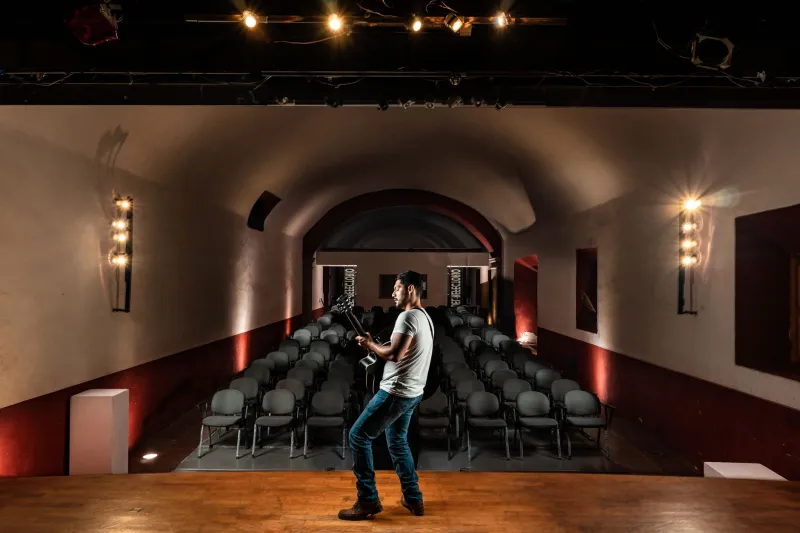
We love a comeback story. The industry loves a comeback story. There's a whole genre of entertainment media built around the narrative arc of fall, struggle, and triumphant return. What we talk about a lot less — almost never, actually — is the inverse: the people who were good enough, who put in the work, who had something real to offer, and just... didn't make it. Not because they failed in some dramatic, instructive way. Just because the math didn't work out.
Those stories are harder to tell. They don't have clean endings. But they're probably more honest about how this industry actually functions than anything else we publish.
Talent Is a Starting Point, Not a Guarantee
Let's get something out of the way early: the entertainment industry does not operate as a meritocracy. It never has. Everyone who works in it knows this, and most people outside it suspect it, but we still collectively participate in a mythology that says the cream rises. That if you're truly talented, truly dedicated, the industry will find you eventually.
It won't. Or at least, not reliably.
Talent is necessary but nowhere near sufficient. What determines who breaks through is a much messier combination of factors — timing, geography, connections, physical presentation, mental health, financial runway, and frankly, luck in the most literal sense. Being in a specific room on a specific Tuesday afternoon when someone important happened to be paying attention.
This isn't a cynical take. It's just what the data — and more importantly, the anecdotal record — actually shows.
The Timing Problem
Consider how many careers have been derailed not by lack of ability but by arriving at the wrong moment. An actor whose look was perfectly calibrated for a decade that had just ended. A songwriter whose style became commercially viable two years after she'd already given up and gone back to school. A comedian who was doing a specific kind of observational humor before the podcast ecosystem existed to support it — and by the time that ecosystem was in place, he'd aged out of the demographic advertisers wanted.
Timing failures are particularly cruel because they're invisible to the person experiencing them. You just know the doors aren't opening. You don't always know why.
The industry moves in cycles — aesthetic cycles, demographic cycles, technology cycles — and those cycles don't wait for talented people to position themselves correctly. Someone who would have been a star in 2005 might be completely unmarketable in 2015, through no fault of their own and with no meaningful change in their actual skill level.
The Network You Were Never Invited Into
Here's something that doesn't get said plainly enough: a huge percentage of entertainment industry opportunity flows through personal relationships that most people never have access to.
This isn't about nepotism in the narrow sense — though that exists too, obviously. It's more diffuse than that. It's about the fact that casting directors call actors they've worked with before. That showrunners hire writers they went to school with or encountered at specific industry events. That managers take meetings with clients who were referred by someone they already trust.
If you didn't grow up in LA or New York, if you didn't attend a conservatory or a prestigious film program, if you don't have a family connection to the industry — you're starting from a position where most of the informal infrastructure simply doesn't apply to you. You can hustle your way into some of it. But not all of it. And the parts you can't access are often the parts that matter most.
This disproportionately affects performers from working-class backgrounds, from rural areas, from communities of color that have historically been locked out of industry networks. The talent pool is genuinely diverse. The opportunity pool is much, much less so.
When Mental Health Becomes a Career Factor
This one's uncomfortable to write about because it can tip into something that sounds like blame. It's not meant to.
The entertainment industry's demands — the rejection, the financial instability, the constant public evaluation of your face and body and choices, the feast-or-famine nature of the work — are genuinely brutal. And they fall hardest on people who are already managing anxiety, depression, trauma histories, or other mental health challenges.
Some people find that the creative work itself is stabilizing. Others find that the industry environment makes their struggles significantly worse. And when that happens, the practical consequences can be career-ending: missed auditions, erratic behavior in professional settings, an inability to maintain the relentless self-promotion that modern entertainment careers require.
We've built a system that is deeply inhospitable to human fragility, and then we're surprised when fragile humans don't make it through. The performers who do break through despite significant mental health challenges are often celebrated as inspirational. The ones who didn't make it for the same reasons are just... absent from the conversation.
What Gets Left Behind
I've spoken with people who spent years pursuing performance careers and eventually stepped away — not because they failed publicly, but because the cumulative weight of invisible doors and near-misses and financial depletion made continuing impossible. Most of them don't describe bitterness, exactly. More like a complicated grief.
They're not broken people. Many of them are doing genuinely interesting things — teaching, building businesses, raising families, making art in contexts that don't require industry validation. But there's often a thread of something unresolved. A sense that they never got a fair read. That the evaluation was never really about what they could do.
And honestly? They're probably right about that.
What This Tells Us About the Industry
The existence of talented people who never got their shot isn't a bug in the entertainment system. It's closer to a feature — or at least an inevitable byproduct of how the system is structured. There are more talented people than there are slots. The selection process is opaque, inconsistent, and heavily influenced by factors that have nothing to do with craft.
Understanding that doesn't require us to stop celebrating people who do break through. But it should probably make us more careful about the stories we tell about why they broke through. Success in entertainment is real. It's also, more often than we admit, partly a matter of being the right person in the right place when the right door happened to be open.
For every person standing on that stage, there are others who were just as ready, just as skilled, who never got the knock.