We're All Rooting for the Bad Guy Now — And That Says a Lot About Us
Let me set a scene. You're three episodes deep into a show, and the character you've been following — the one you've spent hours with, whose backstory you know better than some of your real-life friends — does something genuinely awful. Maybe they betray someone who trusted them. Maybe they make a selfish choice that costs other people dearly. And yet, somehow, you're still on their side. You close your laptop, go to bed, and wake up thinking about what happens to them next.
Welcome to the villain era of American entertainment.
This isn't a fringe thing anymore. It's the mainstream. And I think it's worth sitting with why.
The Golden Age of "I Know This Is Wrong But..."
Think about the characters who've dominated pop culture conversations over the last decade or so. Walter White from Breaking Bad — a high school chemistry teacher who becomes a drug kingpin and, somewhere along the way, stops being sympathetic and becomes genuinely monstrous. And yet people wore his face on T-shirts. Tony Soprano built an entire prestige TV legacy on being a violent, manipulative man we couldn't stop watching. More recently, Succession's Roy family gave us four seasons of people behaving horribly to each other, and the show became a cultural phenomenon.
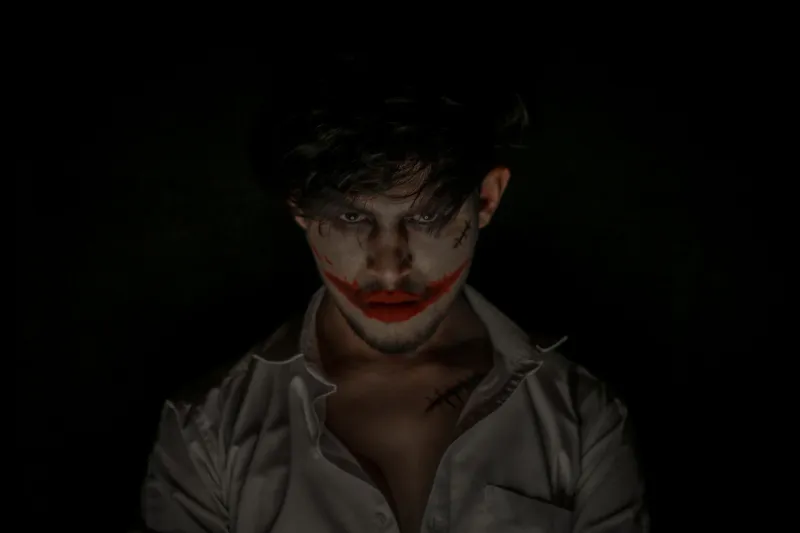
Films aren't exempt, either. Joker — both the 2019 Joaquin Phoenix version and its sequel — sparked real conversation about how far audiences were willing to follow a character into darkness. Gone Girl's Amy Dunne became a weird feminist icon despite, you know, everything she did. Even Disney has leaned in, giving us Maleficent and the Descendants franchise, recasting classic villains as complicated protagonists for younger audiences.
The pattern is clear. We're not just tolerating morally gray characters — we're actively seeking them out.
What's Actually Driving This?
Here's my take: traditional heroism started feeling a little hollow. The uncomplicated good guy who always does the right thing, never wavers, and gets rewarded for his virtue? That character stopped feeling real to a lot of viewers, especially as the world got more visibly complicated.
There's genuine psychological research behind why we connect with flawed characters. It's called "moral licensing" in some academic circles — when a character does something good, it gives us permission to follow them through something bad. But beyond the psychology jargon, I think it's simpler than that. We see ourselves in imperfect people. Nobody is walking around making purely good decisions every day. We cut corners. We prioritize ourselves sometimes. We've all done things we're not proud of.
A character who does the same — but bigger, and on screen — gives us a strange kind of permission. It's cathartic.
There's also the element of competence. A lot of the most beloved morally gray characters are exceptional at what they do. Cersei Lannister in Game of Thrones is a masterclass in political manipulation. Patrick Bateman in American Psycho is terrifying but undeniably compelling in his single-mindedness. We're drawn to people who are excellent, even when their excellence is being applied to something we'd never endorse.
Streaming Changed the Game
It's impossible to talk about this trend without acknowledging what Netflix, HBO Max, Hulu, and the rest of the streaming landscape did to storytelling. When you have ten or thirteen episodes to fill — or multiple seasons — you need complexity. A one-note hero gets boring fast. Long-form storytelling essentially demands that characters evolve, regress, contradict themselves, and surprise us.
Streaming also changed who gets to tell stories. More diverse voices in writers' rooms meant more nuanced characters, particularly for groups that had historically been flattened into either heroes or villains with nothing in between. Shows like Insecure, Atlanta, and Fleabag gave us protagonists who were deeply human in their messiness — not evil, but not exactly aspirational either. That middle ground became incredibly rich territory.
And let's be honest — the algorithm rewards engagement, not virtue. A character who does something shocking gets people talking, posting, theorizing. Morally complicated storytelling is practically engineered for the social media era.
Is This a Problem? (Genuinely Asking)
This is the part where some people get nervous. Does rooting for bad guys normalize bad behavior? Are we desensitizing ourselves to real-world harm by spending so much emotional energy on fictional monsters?
I don't think it's that simple, and I'd push back on the idea that entertainment should be morally instructive in the most obvious sense. Some of the most powerful storytelling works precisely because it puts us inside a perspective we'd never choose in real life. Lolita is disturbing because we're in Humbert Humbert's head. We Need to Talk About Kevin is devastating because we're forced to sit with a mother's impossible grief and confusion. That discomfort is the point.
The question is whether audiences are actually engaging critically or just enjoying the vibes. And that probably varies wildly from viewer to viewer.
Where Does This Go From Here?
I don't think the villain era is a passing trend. If anything, I think we're about to see it get more sophisticated. The next wave of morally complex storytelling is likely to push into territory that feels even more uncomfortable — characters whose worldviews we might partially agree with, even as their methods appall us. Characters who are right about the problem but catastrophically wrong about the solution.
That's genuinely interesting storytelling ground. And American audiences have proven, repeatedly, that they're ready for it.
The real question isn't whether we'll keep watching. We will. The question is what stories we want to tell ourselves about why.